Baking Tips | September 19, 2026
Whole nutmeg has a reputation problem. Everyone agrees it tastes better than the pre-ground stuff, but the actual act of turning that hard little seed into usable spice can feel like a chore, or worse, a hazard. I once watched a friend attack a nutmeg with a box grater and a look of pure determination, and the result was a knuckle that needed a bandage and a spice that was mostly dust and disappointment. It doesn't have to be that way.
The first thing to understand is that nutmeg is dense and oily. Those oils are where the flavor lives, and they are also why the spice clings to everything it touches. A good grater does two things: it creates a fine, even texture, and it keeps your fingers safely away from the cutting surface. You have a few options, and the right one depends on how often you bake and how much counter space you are willing to surrender.
The Tools Worth Owning
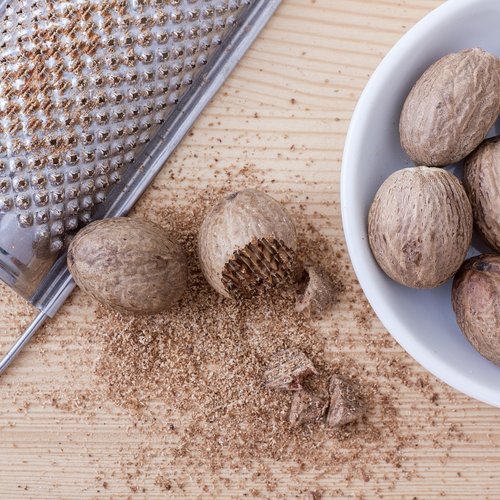
A microplane or fine rasp is the most common choice, and for good reason. It produces a fluffy, almost powdery grate that dissolves evenly into batters and custards. The catch is that you need to hold the nutmeg with your fingertips close to the blade, which makes some people nervous. The trick is to hold the nutmeg at the very top, where the seed is widest, and to stop grating when you get down to a nub. That nub can go into a mug of warm milk or a pot of simmering rice, where it will infuse quietly and then be fished out.
A dedicated nutmeg grinder, the kind with a small storage compartment and a crank handle, is another option. These are less common in American kitchens but worth seeking out if you grate nutmeg weekly. They tend to produce a slightly coarser grate, which is fine for pies and quick breads but less ideal for delicate sauces. The advantage is that your fingers never get near the blade, and the unused nutmeg stays fresh inside the chamber.
Then there is the old-fashioned method: a fine microplane and a small piece of nutmeg held in a paper towel. The paper towel gives you grip and keeps the oils off your skin, which matters if you are grating a lot of nutmeg at once. It also catches the stray bits that would otherwise fly across the counter. I keep a stack of small paper squares in my spice drawer for exactly this purpose.
Technique and Timing
Grate nutmeg over the bowl, not over the counter. This sounds obvious, but the static cling of freshly grated nutmeg means that a good portion of it will jump ship if you are not careful. Hold the grater directly over your mixing bowl or measuring cup, and grate in short, steady strokes. You will need less than you think. A quarter of a teaspoon of freshly grated nutmeg is roughly equivalent to a full teaspoon of the pre-ground kind, because the oils are still intact and the flavor is far more concentrated.
Timing matters too. Grate nutmeg just before you use it. The moment the seed is broken, those aromatic oils begin to evaporate, and within an hour the difference is noticeable. If you must grate ahead, store the result in a tiny airtight jar in a cool, dark place, and use it within a day or two. But honestly, the whole ritual takes thirty seconds, and the smell alone is worth it. There is no better way to wake up a batch of morning pancakes or a pot of evening custard.
One last note: buy whole nutmegs that are heavy for their size and smell sweet when you scratch the surface. If they smell like nothing, they will taste like nothing. A good nutmeg should feel like a small, dense stone and should have a faint sheen from its natural oils. Store them in a glass jar away from heat and light, and they will keep for a year or more. Then grating becomes not a chore but a small, satisfying pleasure.





























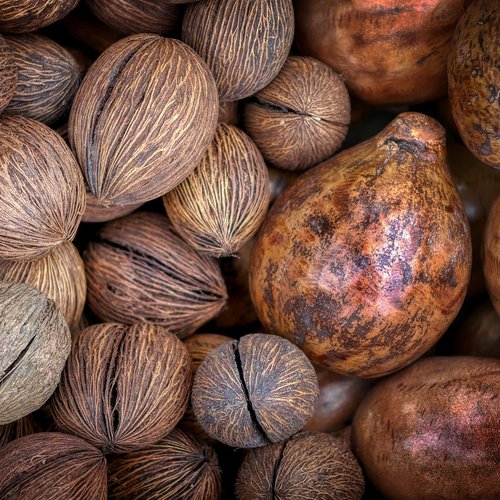
Once you switch to grating whole nutmeg at home, the dusty jar in your pantry will never satisfy you again.
Alice Rose
Sep 9, 2026 at 3:12 pm